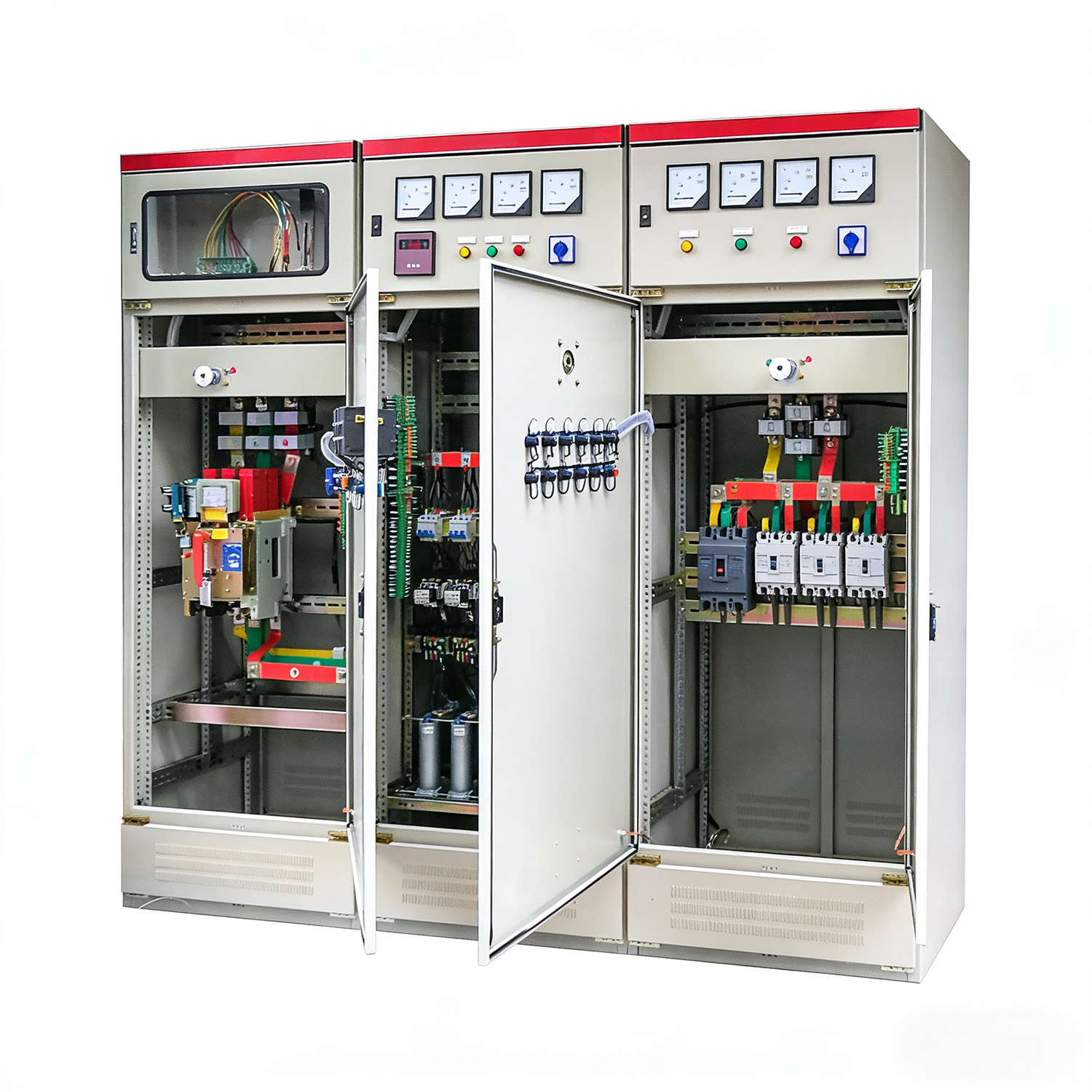
An unverified bid is a ticking time bomb in your electrical room. Price alone cannot guarantee reliability when a massive fault hits your switchboard. Your power distribution system demands empirical, destructive-tested proof of safety. In this guide, we break down exactly what type tests are, why they remain non-negotiable for any tender, and how to rigorously audit a submission to protect your facility from catastrophic downtime.
Type Tests Validate Design: Unlike routine factory checks off the assembly line, type tests are extreme stress evaluations performed on prototypes to prove the fundamental engineering framework.
Performance Metrics are Non-Negotiable: Legitimate bids must include certified proof of ultimate breaking capacity, service breaking capacity, temperature rise limits, and dielectric insulation performance.
Global Standards Matter: High-quality bids are backed by tests conforming to rigorous international frameworks like IEC 60947-2 or ANSI/IEEE standards, certified by independent laboratories.
Verification Prevents Risk: Spotting outdated, incomplete, or fraudulent test certificates is a critical step in the procurement process to protect your facility from safety hazards.
When you are staring down a tender for a massive main-tie-main switchboard, the pricing might look incredibly attractive. But paper promises do not extinguish an arc flash. The true value of a bid lies in objective evidence of reliability, which is exactly where type tests enter the equation.
These comprehensive evaluations are performed on a representative prototype of a specific breaker design. Their primary purpose is to verify that the engineering, materials, and internal mechanisms can withstand the most extreme operational conditions claimed by the manufacturer.
You must distinguish between type tests and routine tests during the evaluation process. While both are necessary, they serve entirely different functions. Type tests prove that the underlying design is flawless and capable of handling severe fault currents. Routine tests are simply basic functional checks performed on every single manufactured unit to ensure there are no immediate assembly errors.
Without comprehensive documentation, a buyer has no scientific guarantee that the Air circuit breakers proposed in the bid will actually handle the electrical loads, clear the fault currents, or survive the environmental stresses promised in the tender documents. Accepting a bid without this level of rigorous validation introduces unacceptable risk into critical power systems.
The core of any technical evaluation involves scrutinizing the specific tests the manufacturer has completed. Because an Electrical Circuit Breaker acts as the primary defense mechanism in industrial switchgear, its failure can lead to fires, equipment destruction, and fatal injuries. The following evaluations are mandatory for a compliant and safe bid.
The most critical function of any protection device is its ability to interrupt a massive surge of current during a fault without sustaining catastrophic damage. Short-circuit performance testing evaluates two primary metrics.
Ultimate Short-Circuit Breaking Capacity proves the maximum fault current the breaker can successfully interrupt once. After clearing a fault at this extreme level, the breaker may no longer be functional and will typically require replacement. The bid must prove the unit will not explode or catch fire under this stress.
Service Short-Circuit Breaking Capacity is a much more stringent test. It verifies the maximum fault current the breaker can interrupt multiple times while remaining completely operational. A higher service rating indicates a more robust internal design and superior arc-quenching capabilities.
Test Type | Primary Purpose | Real-World Engineering Value |
|---|---|---|
Ultimate Breaking Capacity | Maximum single-time fault interruption | Prevents switchboard explosion during catastrophic grid failures. |
Service Breaking Capacity | Multiple fault interruptions while maintaining operability | Ensures operational continuity and reduces replacement costs after standard faults. |
Temperature Rise | Thermal stability under continuous load | Guarantees copper contacts will not weld together during peak facility production. |
In industrial applications, power distribution equipment is expected to carry its maximum rated continuous current for months at a time. As electrical current flows through the internal copper contacts and conductive paths, resistance naturally generates heat.
Temperature rise testing ensures that the breaker can operate continuously at its full rated current without exceeding strict thermal limits. If overheating occurs, the internal insulation can degrade rapidly, and the metal contacts may weld together. A valid test certificate proves that the manufacturer has used adequate conductive materials and designed proper ventilation within the housing to dissipate heat effectively.
Electrical systems are frequently subjected to sudden voltage spikes caused by lightning strikes, grid switching surges, or external interference. Dielectric withstand tests verify the integrity of the insulation materials and the physical air gaps between conductive parts.
A critical component of this evaluation is the Impulse Withstand Voltage test. During this procedure, the prototype is subjected to high-voltage simulated lightning strikes, often in the range of 8kV to 12kV for low-voltage systems. The bid must demonstrate that the insulation will not break down or allow an electrical arc to jump between phases during these transient overvoltage events.
Facilities such as data centers and hospitals require power distribution systems that can be switched on and off frequently for maintenance or automated control. Endurance type tests simulate the long-term lifecycle of the breaker by subjecting it to thousands of mechanical open and close operations without power, followed by thousands of electrical operations under load.
This testing proves the mechanical longevity of the operating springs, latches, and internal linkages. A bid backed by robust endurance testing guarantees that the equipment will not suffer from premature mechanical wear.
A type test is only valid if it is conducted according to a recognized, standardized methodology. Procurement teams must ensure the testing aligns with the regulatory requirements of their specific geographic region and industry.
For most of the world, the International Electrotechnical Commission sets the standard. IEC 60947-2 is the specific regulatory framework governing low-voltage circuit breakers. If a bid claims IEC compliance, the prototype has passed a highly specific sequence of tests regarding short-circuit clearance, temperature rise, and isolation functions.
In North America, the American National Standards Institute and the Institute of Electrical and Electronics Engineers govern electrical infrastructure. The ANSI/IEEE C37 series dictates the testing parameters for low-voltage power distribution. These standards feature different testing sequences and thermal evaluation criteria compared to the IEC.
Procurement managers must explicitly state the required standard in their tender documents. Submitting an IEC-tested breaker for a facility designed strictly to ANSI specifications is a major compliance violation that can lead to failed facility inspections and severe insurance liabilities.
The criteria for evaluating circuit protection bids are shifting rapidly as the electrical infrastructure landscape evolves. A major industry trend is the massive push toward digitalization and smart grid integration. Modern switchgear components are no longer just mechanical switches; they are intelligent devices equipped with advanced IoT-enabled trip units that monitor power quality and communicate directly with facility management systems.
This digital transformation introduces entirely new layers of type testing. Procurement engineers must now look beyond basic mechanical and thermal limits. Electromagnetic Compatibility testing has become a critical component of a modern bid. Buyers must verify that the smart electronic trip units will not misfire when subjected to the high electromagnetic interference typical in heavy industrial environments.
The rise of distributed energy resources like solar arrays and wind turbines has fundamentally changed grid dynamics. These renewable sources introduce bidirectional power flows and exceptionally high short-circuit fault levels. Consequently, leading testing laboratories are now simulating much more complex, bidirectional fault scenarios. Bids that include these advanced testing protocols demonstrate a manufacturer's readiness for the next generation of power distribution.
To properly evaluate a bid, it helps to understand how different classes of protection devices fit into the broader spectrum of electrical infrastructure.
Low-to-medium voltage devices operate primarily up to 1000V AC. Their main challenge is handling incredibly high continuous currents, often up to 6300 Amps, and massive short-circuit fault currents within the confined space of a switchboard panel. Their type tests focus heavily on thermal stability, mechanical endurance, and managing the explosive energy of a low-voltage arc using atmospheric air and arc chutes.
By contrast, High voltage circuit breakers operate at transmission and distribution voltages, such as 72.5kV and above. At these extreme voltages, a physical air gap is entirely insufficient to stop an electrical arc. Therefore, high voltage equipment utilizes vacuum chambers or sulfur hexafluoride gas. The type tests for these units focus far more rigorously on extreme dielectric stress, capacitive switching, and complex arc-quenching dynamics over long physical distances.
Possessing a document labeled as a type test certificate is merely the starting point. You must actively verify the authenticity, relevance, and independence of the documentation provided. An unverified certificate exposes your facility to significant operational risks.
While major manufacturers possess state-of-the-art in-house testing facilities, a commercial bid for critical infrastructure requires unbiased validation. You should look for type test certificates issued by recognized, independent third-party testing laboratories. Global authorities such as KEMA in the Netherlands or ASTA in the UK provide the highest level of assurance. A certificate from these labs means the test was conducted under strict, tamper-proof conditions.
A common misconception is that a type test certificate is permanently valid. In reality, these certificates are tied to a specific, frozen engineering design. If a manufacturer alters the design, materials, or manufacturing process of their Electrical Circuit Breakers, the original type test is technically void. Changing the internal mechanism to save costs or switching the supplier of the copper contacts requires new validation. Always request a formal declaration of conformity stating that the currently manufactured model is identical to the tested prototype.
The most frequent error in bid evaluation is failing to cross-reference the numbers. Take your facility's required ratings, such as a 4000A continuous current or an 85kA short-circuit capacity, and match them exactly against the results printed on the third-party certificate. If the certificate shows testing at a lower voltage or a lower fault current than what your facility requires, the bid is non-compliant.
Identifying deceptive or inadequate bids early in the procurement cycle saves time and prevents costly integration mistakes. Be highly vigilant for warning signs when reviewing submissions.
Imagine a vendor handing over a glossy, one-page summary instead of the full, multi-page testing dossier. This is a massive red flag. A legitimate manufacturer will have no issue providing the complete type test report upon request, complete with oscillograms and temperature logs. Hesitation strongly indicates that the equipment may have failed certain testing sequences.
Another frequent loophole involves submitting certificates for a similar product rather than the exact model being bid. Electrical behavior is highly specific to the exact physical dimensions and materials of a unit. A test on a 2000A frame size does not scientifically validate the performance of a 4000A frame size. The certificate must match the exact part number.
Suspiciously low pricing should trigger intense scrutiny. Rigorous research, development, and independent third-party type testing cost manufacturers hundreds of thousands of dollars. If a bid comes in drastically lower than the market average, the manufacturer has likely cut corners. Often, these underpriced bids rely on outdated tests, unverified in-house reports, or inferior raw materials.
Verified type tests form the non-negotiable baseline of a successful bid, but choosing the right manufacturing partner requires evaluating their overall operational maturity.
A winning bid provides a holistic ecosystem of reliability. This includes comprehensive after-sales support, clear warranty terms, and a guaranteed supply chain for replacement parts like arc chutes and motor operators. Top-tier suppliers of electrical infrastructure do not hide their testing data. They use their rigorous independent certifications as a primary selling point and readily offer engineering support to help buyers understand the technical nuances. By prioritizing transparency and verified engineering over the lowest upfront cost, you secure long-term operational safety for your facility.
Procuring power distribution equipment is a critical investment in facility safety and operational continuity. It serves as the ultimate safeguard against catastrophic electrical faults. The type tests backing a manufacturer's bid are the only objective, scientific proof that the equipment will perform its life-saving function when a severe electrical event occurs.
Facility operators and electrical engineers must prioritize bids backed by complete, independent, and standard-compliant test certificates. Choosing third-party verified reliability over the lowest initial purchase price ensures long-term safety, regulatory compliance, and a strong return on investment. Carefully scrutinize the short-circuit capacities, demand proof of thermal stability, and never accept incomplete documentation for your critical power infrastructure. For proven, type-tested solutions tailored to your project requirements, always align with manufacturers who prioritize rigorous engineering standards.
Type tests are exhaustive, often destructive evaluations performed once on a prototype to validate the core engineering design. They prove the breaker can handle extreme short-circuits and thermal stress. Routine tests are non-destructive checks performed on every single manufactured unit before it leaves the factory to ensure there are no assembly errors or material defects.
Type test certificates do not have a strict expiration date, but they remain valid only as long as the breaker's design, materials, and manufacturing processes remain completely unchanged from the tested prototype. Any significant modification, such as changing the contact alloy or altering the arc chute design, voids the certificate and requires the manufacturer to conduct new type tests.
While manufacturers utilize in-house testing for research and development, commercial and government procurement tenders generally reject in-house certificates due to the inherent conflict of interest. Bids typically require type test certificates from accredited, independent third-party testing laboratories to guarantee unbiased, scientifically verifiable results.
While the broad categories of testing are similar, the actual testing parameters and environments are vastly different. High voltage equipment is subjected to extreme dielectric stress tests and transient recovery voltage simulations that are much more demanding than those applied to low-voltage units, due to the massive electrical forces involved at transmission-level voltages.